
Table of Contents
- Why Buy Handmade Jewelry From Small Makers
- Superior Craftsmanship and Quality You Can Trust
- Budget Friendly Fine Jewelry Online Stores
- Ethical Jewelry Shopping Guide: What Transparency Means
- Personalized Service and Direct Access to the Artisan
- Jewelry as Investment: Heirloom Quality vs. Fast Fashion
- Supporting Local Economy and Community Resilience
- Conclusion
Last Updated: August 18, 2026
Why Buy Handmade Jewelry From Small Makers
When you choose handmade jewelry from independent artisans, you're investing in something fundamentally different from mass-produced retail. Each piece carries the maker's intention, skill, and personal touch. Small-batch production means artisans control every step of creation, selecting materials personally and making design decisions based on quality rather than cost-cutting.
Handcrafted pieces tend to last longer and age better than mass-produced counterparts. An artisan who builds jewelry by hand develops an intuitive understanding of structural integrity, how metals behave under stress, how settings hold stones securely, and how to create pieces that withstand decades of wear. Small jewelers often have direct relationships with suppliers, meaning they can verify where materials come from and ensure ethical practices at every stage.
Superior Craftsmanship and Quality You Can Trust
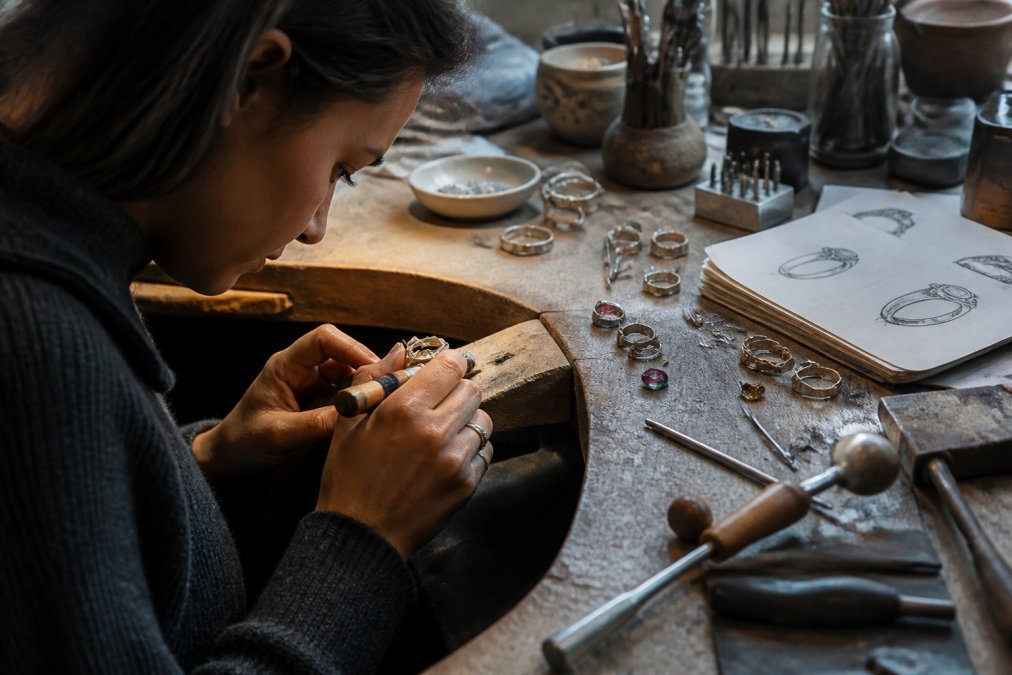
An artisan jeweler spends years, often decades, developing the skills necessary to create pieces that function beautifully and last generations. Small makers typically use higher-quality materials than big-box retailers justify economically. A factory producing 10,000 identical bracelets monthly operates on razor-thin margins per unit. An artisan creating 50 unique pieces monthly can afford better stones, purer metals, and superior findings.
The finishing work reveals the difference most clearly. Hand-polishing, custom sizing, and individual quality checks are standard for artisan jewelry. Mass production uses automated finishing that prioritizes speed over precision.
Life Gets Better carries handcrafted pieces from artisans who prioritize this level of quality. The Wide Dark Leather Cuff with Natural Turquoise Chunks ($14.00) features genuine leather and natural turquoise stones where each piece varies slightly, proof that no two are identical. This variation is evidence of handmade creation.
When examining jewelry from small makers, look for consistent stone setting, smooth metal finishing, secure clasps that hold firm, and substantial weight. These details indicate an artisan who tested their work before offering it for sale.
Budget Friendly Fine Jewelry Online Stores
The assumption that handmade jewelry costs more than mass-produced alternatives often isn't accurate. Many artisans price their work competitively because they eliminate middlemen and retail markups. When you buy directly from a maker, you're paying for the craft itself, not a brand name or retail overhead.
Life Gets Better offers pieces across multiple price points. The Blue Chunky Turquoise Feather Beaded Bracelet ($26.00) delivers artisan quality at an accessible entry point. For investment pieces, the BIG PAPA Graduated Pearl Choker ($129.00) represents sterling silver craftsmanship that will appreciate in wearability and beauty over time.
The online model itself reduces costs. Small makers who sell directly through their own stores or curated platforms avoid wholesale markups and retail rent. These savings pass to customers while the maker retains fair compensation for their work.
Ethical Jewelry Shopping Guide: What Transparency Means
Ethical jewelry shopping matters because the jewelry industry has historically operated with opaque supply chains. You might buy a ring without knowing where the diamond came from, whether miners were fairly compensated, or what environmental impact extraction caused. Small makers change this dynamic fundamentally.
When you shop from an artisan, you can ask direct questions about sourcing. Where did this turquoise come from? Is this sterling silver recycled or newly mined? A small maker can answer these questions with specifics. They know their suppliers personally and made deliberate choices about materials.
Many small makers publish their sourcing practices on their websites or product descriptions. Before purchasing, look for this transparency. Artisans who document their choices are demonstrating confidence in their ethical standards.
Personalized Service and Direct Access to the Artisan
When you purchase from a mass retailer, you interact with inventory systems and customer service representatives disconnected from the product's creation. When you buy from a small maker, you can communicate directly with the person who created your piece.
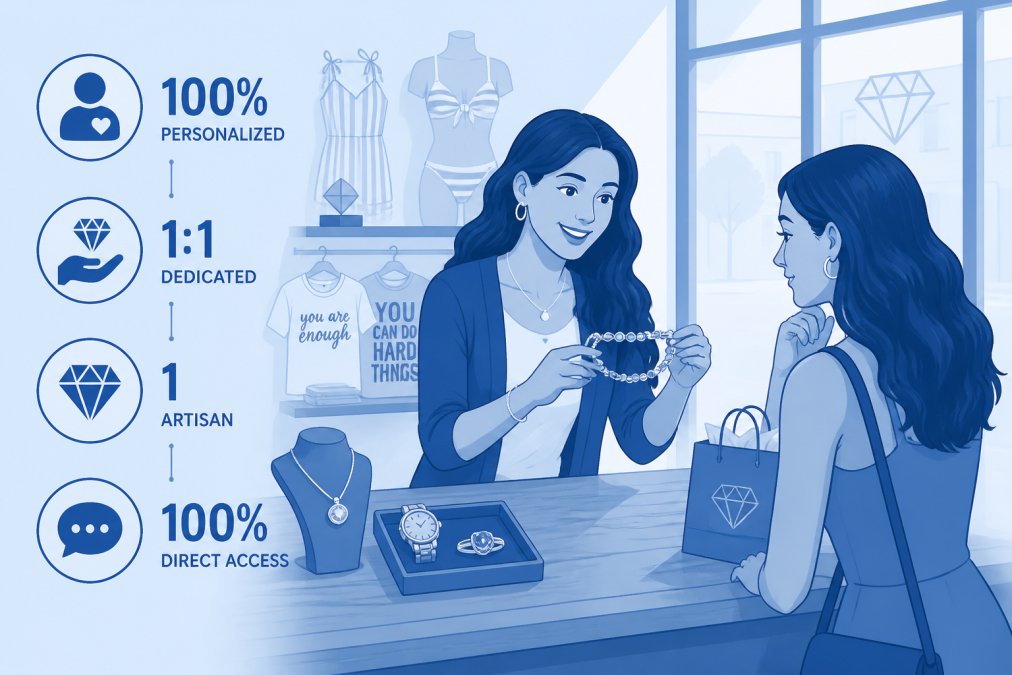
This direct relationship transforms the buying experience. You can request modifications, ask about materials and techniques, and discuss sizing and preferences. An artisan can often accommodate custom requests that big retailers cannot. When you tell an artisan their piece exceeded your expectations, that feedback reaches the person who created it. This accountability produces different service quality than interacting with a corporate customer service department.
Many small makers offer consultations before you purchase, discussing your style, lifestyle, and preferences to recommend materials and designs suited to your needs. Supporting small makers creates genuine community connection, you might follow their work, receive updates about new designs, and feel invested in the artisan's creative journey.
Jewelry as Investment: Heirloom Quality vs. Fast Fashion
Fast fashion jewelry, designed to match this season's styles, depreciates immediately. Heirloom quality jewelry holds or increases in value because it's made with solid materials, superior construction, and timeless design.
Artisan-made jewelry tends toward heirloom quality because makers intentionally create pieces meant to last. They use materials that age beautifully and design with longevity in mind rather than trend cycles. The Men's Blue Lapis Lazuli Beaded Bracelet ($49.95) exemplifies this philosophy, crafted with premium gemstones and surgical-grade stainless steel for decades of daily wear.
Consider the lifecycle cost. A fast fashion piece costs $20 and lasts six months. An artisan piece costs $50 and lasts twenty years. The per-year cost favors the handmade alternative significantly.
Supporting Local Economy and Community Resilience
When you buy from a small maker, you're directly funding their livelihood. The money doesn't flow to corporate shareholders or distant supply chains. It goes to someone creating in their own studio or workshop.
Small makers typically source materials locally or from other small suppliers. They might hire assistants or apprentices, training the next generation of craftspeople. A neighborhood with active artisans becomes more vibrant, and the cultural identity of a place deepens when local craft traditions continue and evolve.
Communities with strong local artisan networks adapt more easily to economic disruptions. They have diversified sources for goods and services. Makers invested in their reputation and community standing produce better work, motivated by pride in their craft and relationships with people who wear their creations.
Life Gets Better curates pieces from artisans committed to this model. By shopping through platforms like this, you're supporting not just individual makers but the entire ecosystem of small-batch production and ethical commerce.
Conclusion
The benefits of shopping small for jewelry compound over time. You own pieces that last longer, look better, and mean more because they carry the intentionality of their maker. You support artisans who care about quality over volume and participate in a supply chain you can understand and trust.
Life Gets Better makes this choice convenient by curating handcrafted jewelry from makers committed to superior craftsmanship and ethical practices. Browse pieces like the Genuine Leather Wide Cuff Bracelet with Regalite Slab ($37.00) or the Turquoise Beaded Bracelet ($39.95), each one handmade with premium materials and designed to become a lasting part of your collection. Start treating yourself to jewelry that actually deserves the space in your life. Get started with Life Gets Better and discover pieces that make you feel genuinely better every time you wear them.
| Aspect | Handmade from Small Makers | Mass-Produced Retail |
|---|---|---|
| Material Quality | Premium solid metals and gemstones | Plated bases, lower-grade stones |
| Durability | 10-30+ years typical wear | 6-18 months before degradation |
| Customization | Direct communication with maker | Limited to existing inventory |
| Supply Chain Transparency | Fully traceable, ethical sourcing available | Opaque, difficult to verify |
| Price Point | Competitive or lower when calculated per-year | Higher total cost of ownership |
| Environmental Impact | Reduced, especially with recycled materials | Significant from mass production |
| Community Impact | Direct support to local artisan economy | Profits flow to distant corporations |
| Resale/Heirloom Value | Appreciates emotionally, maintains value | Depreciates immediately |
Frequently Asked Questions
Why is it better to buy jewelry from a small business than big-box retailers?
Small jewelry makers prioritize craftsmanship, ethical sourcing, and personalized attention that mass-produced retailers cannot match. You get direct access to the artisan, custom fabrication options, and pieces designed with intention rather than trend cycles. Small makers also maintain supply chain transparency, so you know exactly where materials come from and how workers are treated. Plus, each handcrafted piece is unique, no two are identical, giving you something truly one-of-a-kind rather than the same design thousands of others own.
How does shopping small impact jewelry quality and craftsmanship?
Artisan makers invest time in every detail because their reputation depends on quality. They hand-select gemstones for clarity and color, use premium metals like sterling silver, and employ traditional techniques alongside modern precision. Small makers often offer heirloom-quality pieces built to last generations, not just seasons. They also provide maintenance and repair services, ensuring your jewelry stays beautiful. When you buy from a small maker, you're investing in superior materials and expert attention that big-box production lines simply cannot provide.
Is it more cost-effective to buy jewelry from small businesses?
Yes. Small makers eliminate middleman markups that big retailers add. You pay the artisan directly, not a corporation with massive overhead. Many offer budget-friendly options starting at $14-$40 for handcrafted pieces, while still maintaining ethical practices and quality materials. Because each piece is made to order or in small batches, you're not paying for excess inventory or seasonal clearance pricing. You also avoid impulse purchases of trend-driven pieces that lose value quickly. Small jewelry is an investment that holds or appreciates in value over time.
What should I look for when choosing an ethical jewelry maker?
Prioritize makers who openly share their sourcing practices and materials. Ask where gemstones come from and whether they're conflict-free. Check if they use recycled metals or responsibly mined precious metals. Look for transparency about labor practices, family-owned and small-batch producers typically have shorter, more traceable supply chains. Read customer reviews about durability and repair services. Reputable small makers also offer detailed product descriptions, clear return policies, and are accessible for questions. Avoid vague marketing language; real ethical makers provide specific information about their practices and materials.
[EXTERNAL_LINK: Consumer guide to ethical jewelry sourcing | ftc.gov]
[EXTERNAL_LINK: Gemstone quality standards and certifications | americangemsociety.org]
[EXTERNAL_LINK: Sustainable and ethical jewelry practices report | bbbonline.org]
This article was written using GrandRanker