
Table of Contents
- Verify the Seller's Reputation and History
- How to Spot Fake Jewelry Online
- Jewelry Appraisal and Certification Explained
- Secure Payment Methods and Encryption
- Budget Friendly Fine Jewelry Online Stores
- Shipping, Insurance, and Post-Purchase Verification
- Return Policies and Buyer Protection
- Conclusion
Last Updated: August 17, 2026
Verify the Seller's Reputation and History
A reputable jeweler has verifiable history, transparent business practices, and clear communication channels. Check how long the business has been operating and review customer feedback across multiple platforms. Look for red flags like newly created websites, vague company information, or missing contact details. A trustworthy seller lists a physical address, phone number, and clear return policies upfront.
Read customer testimonials carefully, paying attention to comments about shipping times, product accuracy, and problem resolution. Verify whether the business is registered with the Better Business Bureau or similar consumer protection organizations. Many jewelers display certifications from industry organizations, verify these independently rather than taking the seller's word for it. A legitimate seller welcomes questions about sourcing, manufacturing, and quality standards. If they're evasive or dismissive, shop elsewhere.
How to Spot Fake Jewelry Online
Identifying counterfeit jewelry requires understanding what makes authentic pieces distinctive. Fake jewelry often has inconsistent weight, poor craftsmanship, or incorrect hallmarks.
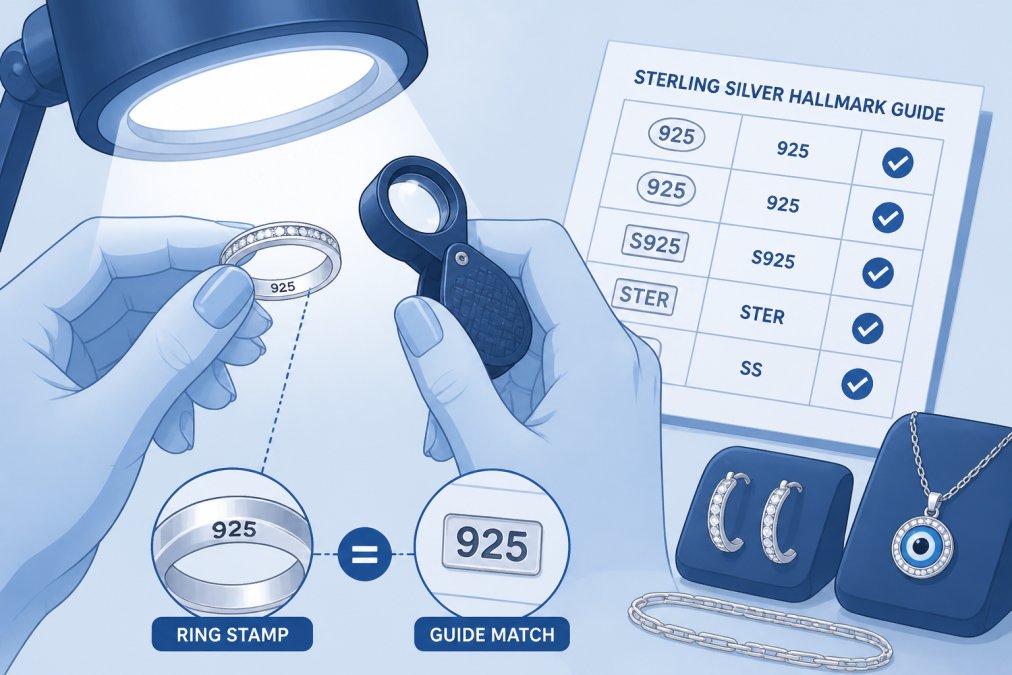
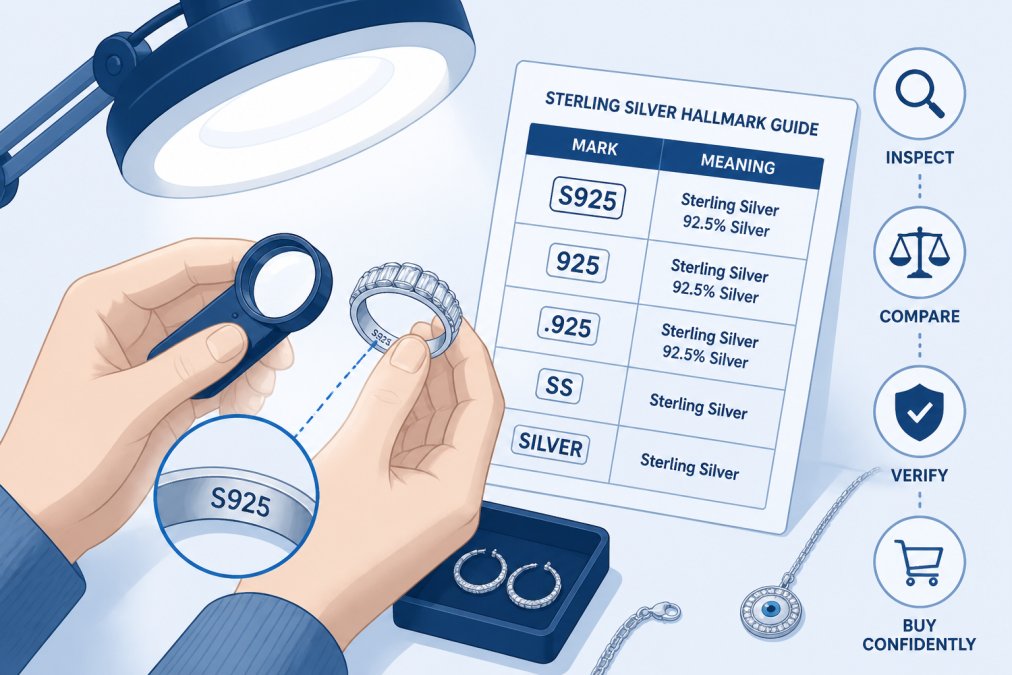
Hallmarks are your first line of defense. Authentic precious metals carry specific stamps indicating karat weight, metal type, and maker's mark. Sterling silver should be marked .925 or 925. Gold should show 10K, 14K, 18K, or 22K. These markings must be clear, properly aligned, and consistent with the piece's size. Fake jewelry often has blurry, crooked, or completely missing hallmarks.
Weight inconsistencies reveal fakes immediately. Real precious metals have specific densities. A gold ring should feel substantially heavier than a similar-sized plated ring. Color and finish quality separate authentic from counterfeit. Real gold maintains consistent color throughout. Real sterling silver has a bright, lustrous finish that doesn't tarnish excessively. Plated jewelry often shows color variations where plating wears away, revealing base metal underneath.
Ask the seller for close-up photos of hallmarks and certifications. Legitimate jewelers provide these details without hesitation. If product photos look generic or low-quality, that's a warning sign.
Jewelry Appraisal and Certification Explained
Certification provides third-party verification of a jewelry piece's authenticity and quality. The most recognized certifications come from the Gemological Institute of America (GIA) and the American Gem Society (AGS). A GIA report documents a gemstone's characteristics: carat weight, color, clarity, and cut quality. These factors, known as the Four Cs, determine a diamond or gemstone's value and desirability.
Appraisals differ from certifications. An appraisal estimates monetary value for insurance purposes, while a certification documents the stone's physical characteristics. Before making a significant purchase, request certification documentation. Reputable sellers provide these reports or can arrange them quickly.
Color grades range from D (colorless) to Z (light color). Clarity grades assess visible inclusions, ranging from Flawless to Included. Cut quality evaluates how well the stone's facets reflect light. Carat weight measures the stone's mass. Understanding these standards helps you evaluate whether a piece's price aligns with its quality. Life Gets Better offers a curated selection of premium jewelry, including pieces that may be certified, so you can shop with confidence in the quality you're receiving.
Secure Payment Methods and Encryption
The payment method you choose directly impacts your protection when you buy jewelry online safely. Credit cards offer the strongest consumer protections. If fraud occurs or the seller doesn't deliver as promised, you can dispute the charge through your credit card company. The Fair Credit Billing Act limits your liability to $50 for unauthorized charges.
Look for SSL encryption on every payment page. You'll see a padlock icon in your browser's address bar and a URL starting with "https://" rather than "http://". This encryption protects your financial information from interception.
Verify the Domain Before Entering Payment Information
Phishing attacks targeting jewelry buyers often use domains that closely mimic legitimate retailers. Before entering any payment information, verify the seller's domain independently. Type the website address directly into your browser rather than clicking links from emails or social media. Check that the domain matches the seller's official website listed on their business registration or Better Business Bureau profile.
Use a domain lookup tool to verify when the domain was registered. Newly registered domains (created within the last few months) are a red flag for fraudulent sites. Legitimate jewelry retailers typically maintain their domains for years. Additionally, check the domain's SSL certificate by clicking the padlock icon in your address bar. The certificate should show the business's registered legal name, not a generic hosting company name.
Avoid Phishing and Social Media Payment Requests
Never click payment links sent via email, text message, or social media direct messages, even if they appear to come from a seller you trust. Legitimate retailers direct you to their official website for checkout, not external payment links. Scammers create fake Instagram accounts and Facebook pages impersonating jewelry retailers, offering discounts to lure buyers to fraudulent checkout pages. If you discover a jewelry seller through social media, visit their official website directly rather than using links provided in social posts.
Choose the Right Payment Gateway
Credit cards remain your best choice for high-value purchases because they offer chargeback protection and fraud liability limits. PayPal and similar payment services offer intermediate protection through buyer protection programs, but these have limits and specific conditions. Avoid wire transfers, direct bank transfers, cryptocurrency, gift cards, or money transfer services like Western Union for jewelry purchases. These options provide zero buyer protection and make it impossible to recover funds if something goes wrong.
Legitimate jewelry sellers accept standard payment methods because they understand that customers need protection. If a seller insists on unusual payment methods or refuses credit card payments, that's a significant warning sign.
Budget Friendly Fine Jewelry Online Stores
Finding quality jewelry at reasonable prices requires knowing where to look and what to expect. Online retailers can offer better prices than brick-and-mortar stores because they have lower overhead costs.
Life Gets Better offers a curated selection of premium jewelry at accessible price points. The Sterling Silver Elongated Cushion Cocktail Ring is priced at $179.00, delivering bold design without luxury markups. The Ellery CZ Tennis Bracelet at $112.00 provides sparkle and sophistication using cubic zirconia stones. For everyday elegance, the Sterling Silver 2.5mm Thin Pink CZ Band Ring at $94.00 combines quality materials with affordability.
Consider cubic zirconia and moissanite as alternatives to diamonds. These lab-created stones cost significantly less than diamonds while offering comparable sparkle and durability. Sterling silver represents the sweet spot for budget-conscious jewelry shoppers. Real sterling silver (.925) costs less than gold while maintaining durability and beauty. Look for sellers who offer free shipping, which Life Gets Better does, effectively reducing your total cost. Compare the final price including shipping rather than focusing only on item cost.
Shipping, Insurance, and Post-Purchase Verification
How a seller handles shipping directly impacts whether your jewelry arrives safely and on time. Reputable sellers offer tracking numbers so you can monitor your package's journey. Request insurance on shipments containing valuable items. For jewelry purchases over $500, insured shipping becomes essential. Verify whether insurance is included or available as an add-on, and confirm the insurance amount matches your purchase price.
Create an Unboxing Documentation Record
When your jewelry arrives, treat the unboxing as a critical verification step. Before opening the package, photograph the sealed box, any security seals, and the shipping label. When opening the package, keep all materials: the original box, tissue paper, tags, and any included documentation. Photograph each item as you remove it from packaging, showing the piece from multiple angles in natural light. If the seller included a certificate of authenticity or gemstone certification, photograph the certificate alongside the actual piece.
Verify Certifications and Hallmarks Immediately
If you ordered a certified stone, verify the certificate number matches the stone you received. Most certificates include a unique identification number. The stone itself may have the certificate number laser-inscribed on its girdle. Use a jeweler's loupe to locate this number and confirm it matches the certificate provided.
Examine hallmarks on metal components under bright light using a magnifying glass. Sterling silver should display .925 or 925. Gold should show 10K, 14K, 18K, or 22K. These markings must be clear, properly aligned, and consistent with the piece's size and weight. If hallmarks are missing, blurry, or different from what was advertised, this indicates a problem.
Arrange Professional Verification Within the Return Window
For high-value purchases (typically over $1,000), arrange a professional appraisal or verification within your return window, typically 14 to 30 days depending on the seller's policy. Contact a local jeweler or gemologist and request an evaluation. Ask the jeweler to verify metal type and purity, gemstone authenticity, gemstone quality, overall condition and craftsmanship, and any discrepancies between the item and seller's claims.
Most jewelers charge $50 to $150 for a detailed appraisal. This cost is worthwhile insurance for purchases over $1,000. If the jeweler identifies discrepancies, you have documentation to support a return or dispute claim while still within the return window. Some sellers include authenticity guarantees that allow you to have pieces independently verified at a jeweler's office at no cost.
Document and Store All Records
Keep all documentation including receipts, certification papers, shipping records, unboxing photos, and appraisal reports. Create digital copies and store them in cloud storage as backup protection. If you discover any issues during verification, contact the seller immediately with photographic evidence. Most sellers will offer a replacement or refund if you report problems within the return window.
Return Policies and Buyer Protection
A clear return policy separates trustworthy sellers from risky ones. Read the policy before completing your purchase. Understand whether returns are accepted, how long you have to initiate a return, and whether the seller covers return shipping costs.
Some sellers charge restocking fees that reduce your refund amount. A 15-20% restocking fee is common in jewelry retail, but it should be disclosed clearly. Check whether the seller accepts returns on custom or personalized pieces. Many jewelers don't allow returns on custom work since they can't resell it.
Federal consumer protection laws provide baseline protections. The FTC enforces regulations requiring truthful advertising and clear return policies. Credit card chargeback protection serves as your safety net. If the seller refuses to honor their return policy or deliver as promised, you can dispute the charge with your credit card company. Document everything: emails, photos, shipping records, and certification documents.
When you buy jewelry online safely, you're making informed decisions at every step. Start with seller verification, understand how to spot fakes, request proper certifications, use secure payment methods, and choose reputable retailers like Life Gets Better. Verify your purchase upon arrival and keep clear documentation of your transaction.
The combination of these practices transforms online jewelry shopping from risky to reliable. You gain access to broader selection, competitive pricing, and the convenience of shopping from home while maintaining the confidence that comes from thorough verification. Life Gets Better makes this process easier by offering free shipping and clear return policies, giving you the confidence to treat yourself or find the perfect gift with complete peace of mind.
Frequently Asked Questions
Is it safe to buy expensive jewelry online?
Yes, if you follow proper safety steps. Verify the seller's reputation through customer testimonials and retailer history, confirm SSL encryption on checkout pages, use secure payment methods with fraud protection, and request GIA or AGS certification for diamonds and gemstones. Reputable sellers offer authenticity guarantees, secure shipping with insurance, and clear return policies. High-ticket purchases require the same verification steps as smaller items, just with more attention to documentation and post-purchase appraisal.
How do I know if a gemstone or metal is authentic when buying online?
Request GIA or AGS reports for diamonds and colored gemstones before purchase. Check product photography for hallmarks (stamped marks indicating karat weight and metal purity) on precious metals like sterling silver or 14K gold. Legitimate sellers provide detailed specifications about carat weight, clarity, cut, and color. Ask for a post-purchase appraisal option and verify the seller's authenticity guarantee in writing. Avoid listings with vague descriptions or suspiciously low prices for claimed quality.
What should I look for in an online jewelry return policy?
Look for policies that allow returns within 30 days minimum, clearly state restocking fees (if any), and offer full refunds or exchanges for defective items. The best policies cover return shipping or offer prepaid labels. Verify the policy covers sizing adjustments and quality issues discovered after arrival. Read customer reviews about actual return experiences, not just the written policy. Avoid sellers with vague return terms, excessive restocking fees (over 15%), or no mention of buyer protection.
What are the red flags of a fraudulent jewelry website?
Watch for missing or unclear SSL encryption (check for padlock icon in the address bar), no customer testimonials or reviews, prices dramatically below market value, poor product photography with no close-ups or hallmark images, missing GIA reports for diamonds, no physical address or contact information, and vague shipping and return policies. Fraudulent sites often pressure quick purchases, lack consumer protection information, and have no warranty or authenticity guarantee. Trust your instinct, if something feels off, shop elsewhere.
How can I verify if an online jewelry store is legitimate?
Check for a physical business address, phone number, and email contact. Read independent customer testimonials on third-party review sites. Verify SSL encryption on all checkout pages. Look for clear return policies, warranty information, and authenticity guarantees. Confirm that the retailer is registered with the Better Business Bureau if applicable. Legitimate jewelers provide detailed product specifications, hallmark information, and GIA or AGS certification for diamonds. Ask about their appraisal and post-purchase verification options.
What documentation should I expect when purchasing fine jewelry?
Expect a detailed receipt listing metal type and karat weight, gemstone specifications (carat, clarity, cut, color), and any GIA or AGS certificate numbers. Reputable sellers include authenticity guarantees in writing. For diamonds, request the full GIA or AGS report. You should receive shipping documentation with tracking and insurance details. Keep all paperwork for future appraisals or insurance claims. Some sellers offer post-purchase appraisal services, this is a sign of confidence in their product authenticity.
Can I trust budget friendly fine jewelry online stores?
Yes, if they meet the same verification standards as higher-priced retailers. Budget-friendly doesn't mean low-quality, it often means lower overhead costs passed to customers. Verify hallmarks, request GIA or AGS certification for diamonds, check return policies, and read customer testimonials. Life Gets Better offers sterling silver pieces like the Ellery CZ Tennis Bracelet ($112) and Helene Bezel CZ Tennis Necklace ($99) with transparent specifications and free shipping. Affordable jewelry from reputable sellers provides excellent value without sacrificing authenticity or consumer protection.
This article was written using GrandRanker