
Table of Contents
- Why Moissanite Needs Regular Cleaning
- What You'll Need: Tools and Cleaning Solutions
- How to Clean Moissanite Rings at Home
- Can You Use Ultrasonic Cleaners on Moissanite?
- How Often Should You Clean Your Ring?
- How to Store Moissanite Jewelry
- Professional Cleaning vs. At-Home Care
- Common Issues and Solutions
Last Updated: August 16, 2026
Why Moissanite Needs Regular Cleaning
Moissanite jewelry is built to last a lifetime, but its brilliance won't maintain itself without proper care. Over time, oils from your skin, lotions, dust, and environmental residue accumulate on the surface of moissanite stones, dulling their characteristic sparkle. Because of moissanite's high refractive index, dirt and buildup are visibly apparent, the very property that makes it stunning when clean also makes it show every smudge.
Residue trapped around prongs and settings can trap moisture, potentially affecting the metal setting itself. Hard water deposits and mineral buildup accelerate this process. Cleaning isn't about restoration; it's about maintenance, preventing damage before it starts.
Establishing a cleaning routine that matches your lifestyle is recommended. Daily wearers benefit from weekly cleaning, while pieces worn occasionally might need attention every few weeks. Proper maintenance requires only basic household items and fifteen minutes of your time.
What You'll Need: Tools and Cleaning Solutions
Caring for moissanite jewelry at home requires minimal equipment. Most items you already have will work perfectly. The key is choosing non-abrasive tools that won't scratch the metal setting or damage surrounding stones.
Essential cleaning supplies:
- Mild dish soap (unscented, without harsh chemicals)
- Warm water (not hot, which can stress the setting)
- Soft-bristled toothbrush (a dedicated one, not the one you use for teeth)
- Microfiber cloth (lint-free, ideal for polishing)
- Small bowl or cup for soaking
- Optional: jewelry cleaning solution specifically formulated for gemstones
The soft-bristled toothbrush is your workhorse. Its bristles are gentle enough to avoid scratching the stone or metal while providing enough texture to dislodge buildup around prongs and settings. Avoid hard-bristled brushes entirely.
Your microfiber cloth matters significantly. Regular paper towels and cotton cloths can leave lint residue or create micro-scratches over repeated use. A microfiber cloth buffs away water spots and dries jewelry without leaving deposits behind.
Never use household cleaners like glass cleaner, bleach, or ammonia-based solutions. These chemicals can damage metal settings, strip protective coatings, or leave residue harder to remove than the original dirt. The same goes for abrasive scrubbing compounds.
How to Clean Moissanite Rings at Home
Step-by-Step Cleaning Instructions
Cleaning moissanite jewelry is straightforward when you follow a consistent process. Most people complete the entire procedure in ten to fifteen minutes.
Step 1: Prepare your cleaning station. Fill a small bowl with warm water and add a few drops of mild dish soap. The water should feel comfortably warm to the touch; hot water can stress the metal setting. Gather your soft-bristled toothbrush and microfiber cloth within arm's reach.
Step 2: Soak the jewelry. Place your moissanite ring in the soapy water and let it sit for five to ten minutes. This allows the warm water and soap to soften buildup and loosen debris around the setting.
Step 3: Gently brush the stone and setting. Remove the jewelry from the water and use your soft-bristled toothbrush to gently brush the surface of the moissanite stone. Pay special attention to areas around the prongs where dirt accumulates. Use light, circular motions rather than aggressive scrubbing.
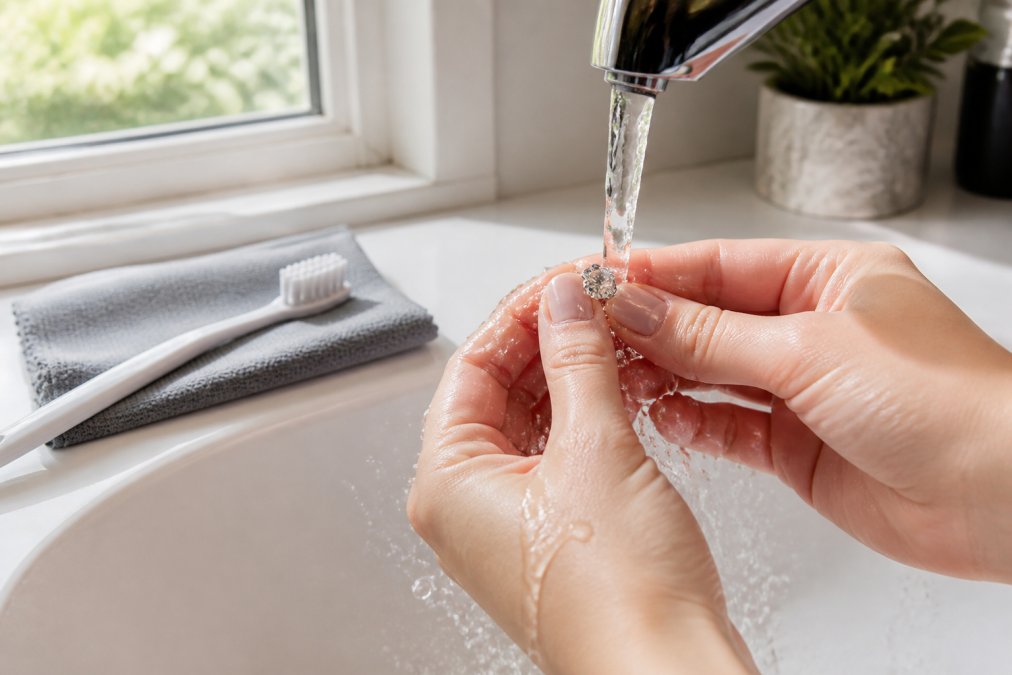
Step 4: Rinse thoroughly. Hold the jewelry under warm running water, allowing the water to wash away soap residue and loosened debris. Rinse for at least thirty seconds, ensuring no soap remains on the stone or setting.
Step 5: Pat dry and polish. Use your microfiber cloth to gently pat the jewelry dry. Once dry, polish the stone with gentle circular motions. This removes water spots and restores the brilliant sparkle.
Dos and Don'ts of Moissanite Care
Your cleaning routine works best when paired with smart handling practices.
Do:
- Clean your moissanite weekly if you wear it daily
- Use only mild dish soap and warm water for routine cleaning
- Store your jewelry in a soft pouch or lined jewelry box when not wearing it
- Remove your ring before swimming, showering, or doing dishes
- Have your setting inspected by a professional annually
- Dry your jewelry completely before storing it
Don't:
- Use ultrasonic cleaners without understanding your specific setting type
- Expose moissanite to extreme temperature changes
- Use abrasive cleaners, bleach, ammonia, or harsh chemicals
- Scrub with hard-bristled brushes or rough cloths
- Assume steam cleaning is safe for all settings
- Leave your jewelry sitting in water for extended periods
- Mix moissanite jewelry with other pieces that might scratch it
The distinction between dos and don'ts comes down to one principle: gentle handling and chemical awareness.
Can You Use Ultrasonic Cleaners on Moissanite?
Ultrasonic cleaners use high-frequency sound waves to vibrate debris away from jewelry surfaces. The answer to whether they're safe depends on your specific setting type.
Ultrasonic cleaning is generally safe for moissanite stones themselves. However, the risk lies in the setting and any accompanying diamonds or gemstones. If your ring has a delicate setting, multiple small stones, or vintage metalwork, ultrasonic cleaning can loosen prongs or damage the setting structure over time.
For solitaire moissanite rings with strong settings, occasional ultrasonic cleaning is acceptable. For rings with intricate designs, multiple stones, or heirloom settings, stick with hand cleaning methods. If you're unsure about your setting's durability, hand wash with mild soap and water.
Steam cleaners present a different concern. While heat doesn't damage moissanite directly, it can stress metal settings and potentially loosen stones if the setting is already compromised. Avoid steam cleaning unless a professional has verified your setting can withstand the temperature change.
How Often Should You Clean Your Ring?
Cleaning frequency depends on your lifestyle, environment, and how often you wear your moissanite jewelry.
Daily wear, active lifestyle: Clean weekly. If you exercise regularly, work with your hands, or spend time in dusty environments, weekly cleaning maintains the stone's brilliance and prevents buildup that becomes harder to remove over time.
Daily wear, moderate activity: Clean every two weeks. Office workers and people with less physically demanding routines can extend cleaning intervals slightly while maintaining optimal appearance.
Occasional wear: Clean monthly or before each wearing. If you reserve your moissanite piece for special occasions, a thorough cleaning before wearing ensures it looks its best.
Environmental factors matter too. Hard water areas require more frequent cleaning because mineral deposits accumulate faster. Coastal environments with salt air may necessitate more regular attention. Chlorinated pools require immediate rinsing and cleaning afterward.
The best approach: establish a routine that feels natural within your schedule. Weekly cleaning takes fifteen minutes and keeps your moissanite consistently brilliant.
How to Store Moissanite Jewelry
Proper storage protects your moissanite jewelry between cleanings and prevents unnecessary damage.
Individual compartments prevent scratching. Store each piece separately in a lined jewelry box with individual compartments, or use soft pouches for each item. While moissanite itself is extremely hard, the metal settings and any accompanying stones need protection. Gold, silver, and platinum can be scratched by other jewelry rubbing against them repeatedly.

Keep jewelry dry and cool. Store your pieces in a dry location away from direct sunlight, humidity, and temperature fluctuations. Moisture can cause metal tarnishing over time, particularly with silver settings. A bedroom closet or dresser drawer works better than a bathroom, where humidity levels fluctuate constantly.
Use soft storage materials. Velvet-lined boxes, microfiber pouches, or jewelry boxes with fabric padding protect against scratches and dings. Avoid plastic bags, which can trap moisture, and paper towel or tissue paper, which are abrasive.
Remove jewelry before bed and during activities. Taking off your ring before sleep prevents accidental damage. Remove jewelry before exercise, swimming, gardening, or any activity where it might get bumped, wet, or exposed to chemicals.
Professional Cleaning vs. At-Home Care
Understanding when to clean at home and when to seek professional help ensures your moissanite jewelry receives appropriate maintenance.
At-home cleaning handles routine maintenance. Weekly or biweekly hand washing with mild soap and warm water removes daily buildup and keeps your jewelry looking brilliant. This is cost-effective and prevents problems from developing.
Professional cleaning addresses deeper issues. Professional jewelers have access to specialized equipment and solutions that remove stubborn mineral deposits and hard water stains that home cleaning can't fully address. They can also inspect your setting for loose prongs, worn metal, or other structural concerns.
Professional inspection is essential annually. Schedule a professional inspection once per year. A jeweler can tighten prongs, check for wear on the setting, assess any accompanying stones, and perform a deep clean using professional-grade equipment.
When to seek professional help immediately:
- You notice loose stones or movement within the setting
- The metal setting shows visible wear, thinning, or damage
- You're uncertain whether your jewelry is safe for ultrasonic or steam cleaning
- Your ring hasn't been professionally inspected in over a year
- You notice unusual discoloration on the metal that home cleaning doesn't remove
Regular home maintenance keeps your jewelry looking beautiful and prevents most problems. Professional care addresses what home cleaning can't and ensures structural integrity over time.
Common Issues and Solutions
Even with proper care, moissanite jewelry sometimes develops issues that require specific solutions.
Dullness or cloudiness: This usually results from oil buildup, soap residue, or hard water deposits. Soak the jewelry in warm soapy water for ten minutes, then brush gently with a soft-bristled toothbrush. Rinse thoroughly and dry with a microfiber cloth. If dullness persists, hard water mineral buildup might be the culprit; professional cleaning can remove deposits that home methods can't reach.
Spots or streaks after drying: Water spots indicate mineral deposits from hard water or soap residue. Dry your jewelry immediately after rinsing using a microfiber cloth. If spots appear, soak the piece in distilled water for a few minutes, then dry immediately.
Loose prongs or movement within the setting: This is a structural issue requiring immediate professional attention. Stop wearing the ring and take it to a jeweler immediately.
Discoloration on metal setting: For gold and platinum, gentle brushing with a soft toothbrush and mild soap usually removes discoloration. Silver tarnish requires specialized silver cleaner or professional restoration.
Residue around prongs that won't come clean: Soak the jewelry longer (fifteen to twenty minutes) to soften stubborn residue, then use a soft toothbrush to gently work around each prong. A wooden toothpick (used very gently) can help dislodge debris from tight spaces without scratching.
Scratches on the metal setting: Minor surface scratches can be buffed out by a professional. Deep scratches or gouges require professional repair and refinishing.
Caring for moissanite jewelry is straightforward when you establish consistent habits. Weekly cleaning with mild soap, warm water, and a soft-bristled toothbrush keeps your pieces brilliant and protected. Proper storage in individual compartments prevents scratching and damage between wearings. At Life Gets Better, we believe that treating yourself to quality moissanite jewelry means committing to its care, and that commitment pays off in years of lasting beauty and sparkle. Start your care routine today, and your moissanite will remain as stunning as the day you received it.
| Cleaning Task | Frequency | Time Required | Best For |
|---|---|---|---|
| Hand wash with soap and water | Weekly (daily wear) | 10-15 minutes | Routine maintenance, removing daily buildup |
| Deep soak and brush | Biweekly to monthly | 15-20 minutes | Stubborn residue, hard water deposits |
| Professional cleaning | Annually | Professional appointment | Mineral removal, specialized equipment |
| Professional inspection | Annually | Professional appointment | Setting integrity, prong tightening |
Frequently Asked Questions
Is Dawn dish soap safe for moissanite?
Yes, mild dish soap like Dawn is safe for moissanite jewelry. Mix a small amount with warm water to create a gentle cleaning solution that removes oil buildup and lotion residue without damaging the stone or its setting. Avoid hot water and always use a soft cloth or soft-bristled toothbrush to gently scrub the surface.
Can moissanite get cloudy over time?
Moissanite can appear dull when oil, lotion, and mineral deposits build up on its surface, especially in areas with hard water. This doesn't mean the stone is damaged, regular cleaning with mild soap and warm water restores its brilliance and sparkle. Proper care for moissanite jewelry prevents this buildup and keeps your pieces looking radiant.
What should I avoid when wearing moissanite?
Avoid exposing moissanite to chlorine, bleach, and harsh chemicals, which can damage the setting and loosen prongs. Remove your ring before swimming, cleaning with strong chemicals, or exercising. Also avoid extreme temperature changes and impact from hard surfaces. These precautions protect both the gemstone and its setting for long-term durability.
How often should I have my moissanite professionally cleaned?
Professional cleaning every 6-12 months is recommended for daily-wear moissanite jewelry, especially if you notice persistent dullness or want a professional inspection of the setting. For pieces worn occasionally, annual cleaning is sufficient. Professional inspection ensures prongs are secure and the setting remains intact.
This article was written using GrandRanker