
Table of Contents
- What Is Moissanite and Why Verification Matters
- How to Verify Quality Moissanite: The Essential Steps
- How to Read a Moissanite Certificate
- Best Moissanite Certification Labs to Trust
- Understanding the Moissanite Grading Scale
- Testing Methods: Diamond Testers, Loupes, and Thermal Conductivity
- Post-Purchase Verification: What to Do When Your Moissanite Arrives
- Common Mistakes to Avoid When Buying Moissanite Online
Last Updated: August 14, 2026
What Is Moissanite and Why Verification Matters
Moissanite is a lab-created gemstone made from silicon carbide that closely mimics diamonds. Its distinctive double refraction and exceptional brilliance make it a popular diamond alternative, but these same characteristics create verification challenges requiring specific knowledge to navigate confidently.
When buying moissanite jewelry online, you rely entirely on seller credibility, product descriptions, and certification documentation. Unlike physical stores where jewelers show you stones under magnification, online purchases demand that you know what to look for in certificates, understand grading standards, and recognize visual markers distinguishing high-quality moissanite from inferior stones.
A poorly verified purchase might arrive looking cloudy, overly rainbow-tinted, or mismatched to photos. At Life Gets Better, we understand that treating yourself to quality moissanite jewelry should feel confident and worry-free. Our curated collection of sterling silver moissanite pieces comes with transparent certification and detailed specifications precisely because we know verification anxiety keeps buyers from making purchases they'll love.
This guide walks you through every verification step, from reading certificates to understanding thermal conductivity limitations, so you can confidently assess moissanite quality before buying and validate what arrives at your door.
How to Verify Quality Moissanite: The Essential Steps
Verifying quality moissanite online follows a logical sequence: start with the certificate, examine optical properties, assess cut quality, and understand the limitations of common testing methods. The verification process typically takes 20-30 minutes per stone and combines document review with visual assessment techniques.
Step 1: Request and Review the Moissanite Certificate
Every high-quality moissanite stone should come with a certificate from an independent gemological laboratory. If a seller won't provide one, that's a red flag suggesting they're either hiding something or don't understand quality standards.
A legitimate moissanite certificate includes stone dimensions (in millimeters), carat weight, color grade, clarity grade, and optical properties documentation. The certificate should be issued by a recognized lab and include a unique identification number allowing you to verify authenticity directly with the laboratory.
When reviewing a certificate, cross-check the seller's description against documented specifications. If the seller claims "colorless" but the certificate shows "near-colorless," that's a mismatch worth addressing. Certificates also document whether the stone exhibits characteristic double refraction, confirming you're receiving moissanite and not cubic zirconia or another simulant.
Look for clarity grades of VS1 or better (Very Slightly Included 1 or higher) to ensure minimal visible imperfections.
Step 2: Check for Double Refraction and Junction Facets
Double refraction is moissanite's most distinctive optical characteristic. Light entering the stone splits into two rays, creating a subtle doubling effect when viewed at certain angles. This isn't a flaw, it's the defining feature that makes moissanite moissanite. However, the strength of this effect varies significantly based on cut quality.
High-quality moissanite exhibits controlled double refraction creating brilliance and fire without appearing cloudy or overly rainbow-tinted. Lower-quality stones show pronounced double refraction making the stone look hazy or excessively sparkly in an unnatural way.
Junction facets, the tiny facet lines where the crown and pavilion meet, also indicate cut quality. Well-cut moissanite shows clean, precise junction facets. Poor-quality stones display blurry or uneven junction facets suggesting rushed cutting or substandard manufacturing.
To assess double refraction yourself, hold the stone at various angles to light. You should see sparkle and color play without the stone appearing cloudy or excessively "rainbow-y."
Step 3: Examine Cut Quality and Brilliance
Cut quality determines how well the stone captures and reflects light. A well-cut moissanite shows exceptional brilliance and controlled fire. Poor cuts result in stones appearing dim, overly colored, or unbalanced in light performance.
Examine the stone's proportions on the certificate. Depth percentage and table percentage should fall within standard ranges (typically 58-65% for depth, 53-66% for table). Stones outside these ranges often show poor light performance.
Symmetry and polish grades matter significantly. Excellent symmetry means facets align precisely, creating even light reflection. Polish quality affects how cleanly light travels through the stone's surface.
When examining photos or videos, look for consistent sparkle across the entire table. Dark areas or uneven light distribution suggest cut quality issues. Life Gets Better's moissanite pieces, like the Ellery CZ Tennis Bracelet, feature carefully selected stones with cut grades ensuring brilliant, balanced light performance.
How to Read a Moissanite Certificate
A moissanite certificate functions as the stone's quality document and authenticity verification combined. The certificate header identifies the issuing laboratory and includes a unique report number, crucial for verifying authenticity on the lab's website. If the lab's website doesn't recognize the report number, the certificate is likely fraudulent.
The measurements section provides precise dimensions in millimeters. These should match the seller's description exactly. Discrepancies suggest mislabeling or certificate fraud.
The color grade describes the stone's body color on a scale from colorless to fancy colored. For moissanite, colorless and near-colorless grades (D-F and G-I respectively) are most common and desirable. Higher color grades produce more neutral sparkle without color interference.
The clarity grade indicates inclusions or manufacturing flaws visible under 10x magnification. For moissanite, VS1 (Very Slightly Included 1) or better ensures the stone appears completely clean to the naked eye.
The optical properties section documents the stone's refractive index, measuring how much light bends as it enters the stone. Moissanite's refractive index (typically 2.65-2.69) differs from diamond's (2.42), confirming you're receiving actual moissanite and not a diamond simulant like cubic zirconia.

Many certificates include a plot diagram showing inclusion location and nature. Study this carefully. Inclusions near edges matter less than those in the table center. Feather-like inclusions (structural weaknesses) are more concerning than pinpoint inclusions (tiny mineral deposits).
The certificate should note whether the stone is lab-created or natural. For moissanite, "lab-created" or "synthetic" is correct. If a certificate lists moissanite as "natural," that's an error.
Best Moissanite Certification Labs to Trust
Not all gemological laboratories maintain equal standards. Reputable moissanite certification labs follow rigorous testing protocols and provide verifiable documentation.
When possible, prioritize stones certified by recognized, independent gemological laboratories. If you can't independently verify a certificate's authenticity, treat that as a red flag.
Understanding the Moissanite Grading Scale
The moissanite grading scale parallels diamond grading systems but differs in important ways. Understanding these differences prevents misinterpretation when comparing moissanite to diamonds.
The color grading scale uses the same letter designations as diamonds (D through Z), but moissanite's optical properties mean color grades have different visual implications. A moissanite stone graded G-I (near-colorless) may appear more colorless than a diamond in the same grade because moissanite's higher refractive index affects how color appears.
The clarity grading scale mirrors diamond clarity: Flawless (FL), Internally Flawless (IF), Very Slightly Included (VS1, VS2), Slightly Included (SI1, SI2), and Included (I1, I2, I3). For moissanite, VS1 and better grades ensure the stone appears completely clean to the naked eye.
The cut grading scale evaluates how well facets capture and reflect light. Excellent and Very Good cuts produce the best light performance. Cut quality directly impacts visual appeal and should be weighted most heavily in your decision-making.
Carat weight measures the stone's mass, with one carat equaling 200 milligrams. Moissanite is slightly less dense than diamond, so a moissanite stone appears slightly larger than a diamond of equal carat weight.
Testing Methods: Diamond Testers, Loupes, and Thermal Conductivity
Multiple testing methods exist for verifying moissanite quality and authenticity. Each has strengths and significant limitations.
Diamond testers (thermal conductivity testers) measure how quickly a stone conducts heat. However, they are notoriously unreliable for moissanite. Many cannot distinguish moissanite from diamond, instead flagging moissanite as "diamond-like" or producing ambiguous results. Use diamond testers only as preliminary screening tools, not definitive verification.
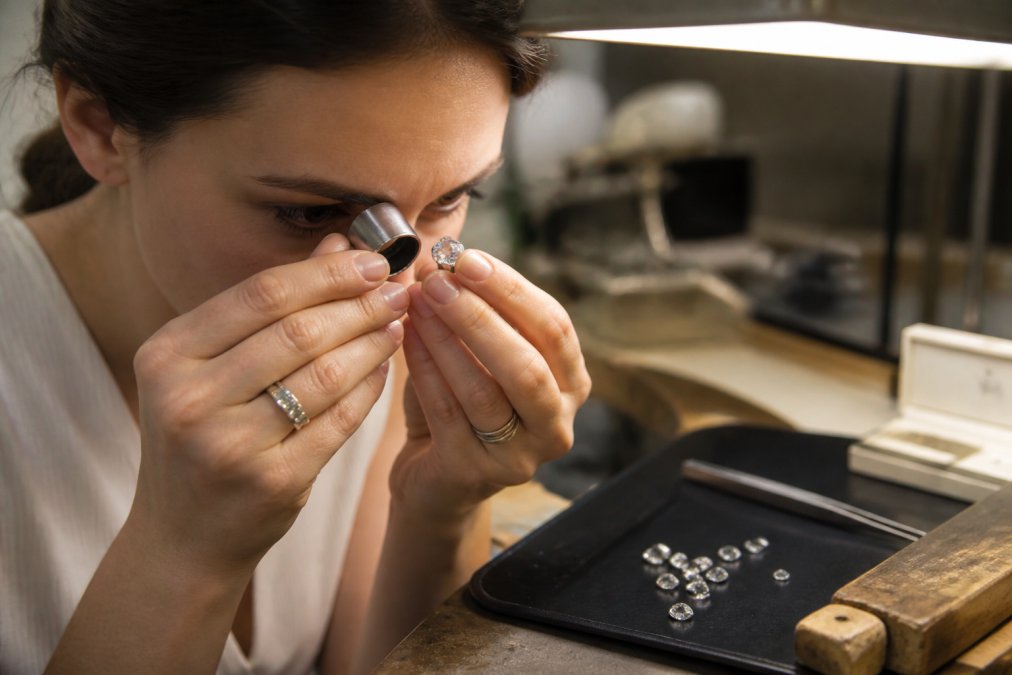
A jeweler's loupe, a 10x magnification tool, is far more reliable for personal verification. With a loupe, you can examine junction facets, assess symmetry, look for inclusions, and evaluate polish quality. This is the single most useful tool you can use yourself.
When using a loupe, examine the stone from multiple angles. Look at the table for evenness and clarity. Examine crown facets for precise alignment and clean edges. Check the pavilion for symmetry. Look for any visible inclusions, scratches, or manufacturing flaws. High-quality stones show crisp, clean facets with no visible imperfections under 10x magnification.
Refractive index measurement requires professional equipment. Gemologists use refractometers to measure exactly how much light bends passing through a stone. Moissanite's refractive index differs distinctly from diamond's, making this an excellent verification method. However, this requires professional gemological equipment and training.
The double refraction test is something you can perform visually. Hold the stone at various angles to light and look through it. Moissanite exhibits visible double refraction. If you see pronounced doubling making the stone appear hazy or cloudy, the stone is likely moissanite with poor cut quality.
Professional appraisal from a certified gemologist remains the most reliable verification method. For high-value purchases, professional appraisal is worth the investment.
Post-Purchase Verification: What to Do When Your Moissanite Arrives
When your moissanite jewelry arrives, verification doesn't end. Comparing the physical stone to the certificate and photos ensures you received exactly what you purchased.
First, verify that the certificate number matches your documentation. Enter this number on the issuing lab's website to confirm authenticity and pull up the original report.
Compare the stone's dimensions to the certificate measurements. Significant discrepancies suggest mislabeling or a substituted stone.
Examine the stone under magnification using a loupe. The physical stone should match the certificate's description. If the certificate claims Excellent cut but the stone shows poor symmetry or uneven facets, you've received a misrepresented stone.
Assess the color visually under neutral lighting. The stone should match the color grade on the certificate.
Check for inclusions visible to the naked eye. If the certificate shows SI1 clarity or better, the stone should appear completely clean.
Evaluate the double refraction visually. You should see characteristic double refraction that's subtle and controlled, not making the stone appear hazy or excessively rainbow-tinted.
Document everything with photos and notes. If the stone doesn't match the certificate or seller's description, you have evidence for a return or dispute claim.
If concerned about authenticity or quality, consider having a professional gemologist examine the stone. This costs $50-150 typically but provides definitive verification. For high-value pieces, this investment protects you against fraud or misrepresentation.
Life Gets Better's commitment to transparent jewelry means every piece comes with detailed specifications and verifiable certification. When you receive a moissanite piece like the Helene Bezel CZ Tennis Necklace, you can follow these verification steps with confidence that the documentation and stone will align.
Common Mistakes to Avoid When Buying Moissanite Online
Most moissanite purchase problems stem from predictable mistakes rather than intentional fraud.
Skipping certificate verification is the most common error. Always verify the certificate number independently on the issuing lab's website before purchasing. This single step catches the majority of certificate fraud.
Misinterpreting double refraction as a flaw causes unnecessary concern. Moissanite's double refraction is normal and expected. However, excessive double refraction making the stone appear cloudy or overly rainbow-tinted indicates poor cut quality.
Relying solely on diamond testers for verification is unreliable. Use them only as preliminary screening tools, not definitive verification. Combine them with certificate review, visual inspection, and professional appraisal.
Comparing moissanite directly to diamonds using diamond grading standards creates confusion. A moissanite stone graded G-I may appear more colorless than a diamond in the same grade.
Ignoring seller reputation and return policies leaves you vulnerable if problems arise. Check seller reviews, verify their return policy before purchasing, and confirm they'll accept returns if the stone doesn't match the description.
Not examining photos carefully before purchasing means you might receive a stone looking different than expected. Request high-quality photos showing the stone from multiple angles under various lighting conditions. Ask for videos showing sparkle and light performance.
Assuming all moissanite looks identical causes disappointment. Cut quality, color grade, and clarity grade vary significantly. Prioritize cut quality and request stones with Excellent or Very Good cut grades.
Buying from sellers who won't provide certificates is a major red flag. Legitimate moissanite sellers provide certificates as standard.
Verifying quality moissanite online transforms what feels like an overwhelming process into a manageable series of steps. By understanding certificates, optical properties, grading standards, and testing limitations, you move from anxious to confident in your purchasing decisions. Life Gets Better makes this process easier by providing transparent certification, detailed specifications, and curated pieces selected for quality. Start with the certificate, examine the physical stone when it arrives, and trust the verification process. Quality moissanite jewelry delivers years of beautiful wear, it's worth taking time to verify you're getting exactly what you're purchasing.
Frequently Asked Questions
How can you tell if moissanite is high quality?
High-quality moissanite displays excellent brilliance and fire with minimal double refraction visible to the naked eye. Check for a valid certificate from a reputable lab, examine the cut quality and facet edges with a jeweler's loupe, and verify the clarity grade and color classification. The stone should have no visible inclusions or cloudiness. Request lab documentation confirming silicon carbide purity and proper heat treatment.
What should I look for in a moissanite certificate from certification labs?
Look for certificates from recognized labs that specify the stone's carat weight, color grade (colorless or near-colorless), clarity grade, and cut quality. The certificate should include details on the refractive index, birefringence measurement, and thermal conductivity rating. Verify the certificate number matches the stone's laser inscription. Ensure the lab is independent and has no direct financial interest in the retailer selling the stone.
Does moissanite pass a thermal diamond tester?
No. Moissanite has different thermal conductivity than diamonds, so it will fail most thermal diamond testers. This is actually useful for verification, if a stone passes a thermal tester and the seller claims it's moissanite, that's a red flag. A legitimate moissanite seller will be transparent about this limitation and provide a certificate instead of relying on thermal testing as proof of authenticity.
What is the difference between colorless and near-colorless moissanite?
Colorless moissanite (grades D-F on the moissanite grading scale) shows no visible color tint and offers maximum brilliance and fire. Near-colorless moissanite (grades G-I) may display a very slight yellow or warm tint under certain lighting, though most people cannot detect it without magnification. Near-colorless options are typically more affordable. Both grades are high-quality; the choice depends on your budget and light-sensitivity preferences.
This article was written using GrandRanker