
Table of Contents
- Does Moissanite Actually Get Cloudy?
- The Difference Between Cloudiness and Dirt Buildup
- Why Moissanite Loses Its Sparkle
- How to Clean Moissanite at Home
- Understanding the Moissanite Oil Slick Effect
- Moissanite Durability: Myths vs. Reality
- Maintaining Your Moissanite Jewelry
- Conclusion
Last Updated: August 15, 2026
Does Moissanite Actually Get Cloudy?
The short answer: no, moissanite does not become cloudy over time. The stone maintains its structural integrity and refractive properties indefinitely. What many people experience is temporary loss of sparkle caused by surface contamination, oil accumulation, soap residue, and mineral deposits, not actual cloudiness within the gemstone itself.
This distinction matters because it changes how you care for your moissanite jewelry. Understanding the real cause of dullness helps you restore your stone's fire and brilliance quickly.
Moissanite's high refractive index creates its distinctive sparkle but also makes it a magnet for oils, soaps, lotions, and environmental particles. When these substances coat the surface, they interfere with light refraction, making the stone appear dull or hazy. This isn't permanent damage; it's cosmetic buildup that responds well to proper cleaning.
The Difference Between Cloudiness and Dirt Buildup
True cloudiness would mean structural changes within the gemstone itself. Moissanite doesn't experience this because it's one of the hardest gemstones available, rated 9.25 on the Mohs hardness scale, second only to diamonds at 10.
What you're actually seeing when a moissanite ring appears cloudy is surface contamination:
- Oil accumulation from skin contact, lotions, and hand creams
- Soap residue left behind after washing hands
- Hard water deposits from tap water minerals
- Dust and environmental particles that settle on the surface
- Cosmetic buildup from makeup, sunscreen, and other products
The key difference is permanence. Cloudiness would be permanent; buildup is temporary and removable. When you clean your moissanite properly, the brilliance returns immediately. Diamonds experience the same buildup, but their lower refractive index makes it less noticeable.
Why Moissanite Loses Its Sparkle
Moissanite's exceptional brilliance comes from its refractive index of 2.65, significantly higher than a diamond's 2.42. This higher refraction creates distinctive fire and sparkle, but also makes the stone particularly susceptible to surface contamination because oils and residues interact more noticeably with the stone's light-bending properties.
Oil Accumulation and Surface Contamination
The most common culprit behind dull-looking moissanite is oil accumulation. Your skin naturally produces oils that transfer to any jewelry you wear. These oils create a thin film that scatters light rather than allowing it to refract properly through the gemstone.
This oil slick effect is more pronounced on moissanite than on diamonds because of how the stone's high refractive index interacts with surface films. A microscopic layer of oil interferes with the precise light paths that create brilliance, making the stone look dull or hazy even though the gemstone itself is perfectly intact.
Daily activities accelerate oil buildup: wearing your ring while cooking, applying lotion, using hand sanitizer, or handling your phone. Within a few days or weeks of regular wear without cleaning, most moissanite rings will show some dullness from this accumulation.
The solution is straightforward: regular cleaning removes the oil film and restores the stone's sparkle. Moissanite requires more frequent cleaning than diamonds, not because it's less durable, but because surface contamination is more visually apparent.
Water Quality and Chemical Residue
Hard water leaves mineral deposits on moissanite that contribute to a cloudy appearance. When you wash your hands or rinse your ring, minerals like calcium and magnesium remain on the surface after the water evaporates. Chemical residue from soap, shampoo, and personal care products also settles on the stone, reducing clarity and sparkle.
The mineral composition of your local water supply affects how quickly this buildup occurs. People in areas with very hard water may notice their moissanite dulling faster than those with softer water.
How to Clean Moissanite at Home
Proper cleaning restores moissanite's brilliance and is far simpler than many people assume. You don't need expensive equipment or professional services for routine maintenance.
Daily Cleaning Steps
The simplest approach to maintaining moissanite is a quick daily rinse:
- Run the ring under warm (not hot) water to loosen surface particles and oils
- Apply a small drop of mild dish soap to the stone and band
- Gently rub with a soft microfiber cloth using circular motions, paying attention to the setting
- Rinse thoroughly under running water until no soap residue remains
- Dry with a clean microfiber cloth to prevent water spots and mineral deposits
This five-minute process removes daily oil accumulation and keeps your moissanite sparkling. Regular light cleaning prevents heavy buildup better than occasional deep cleaning.
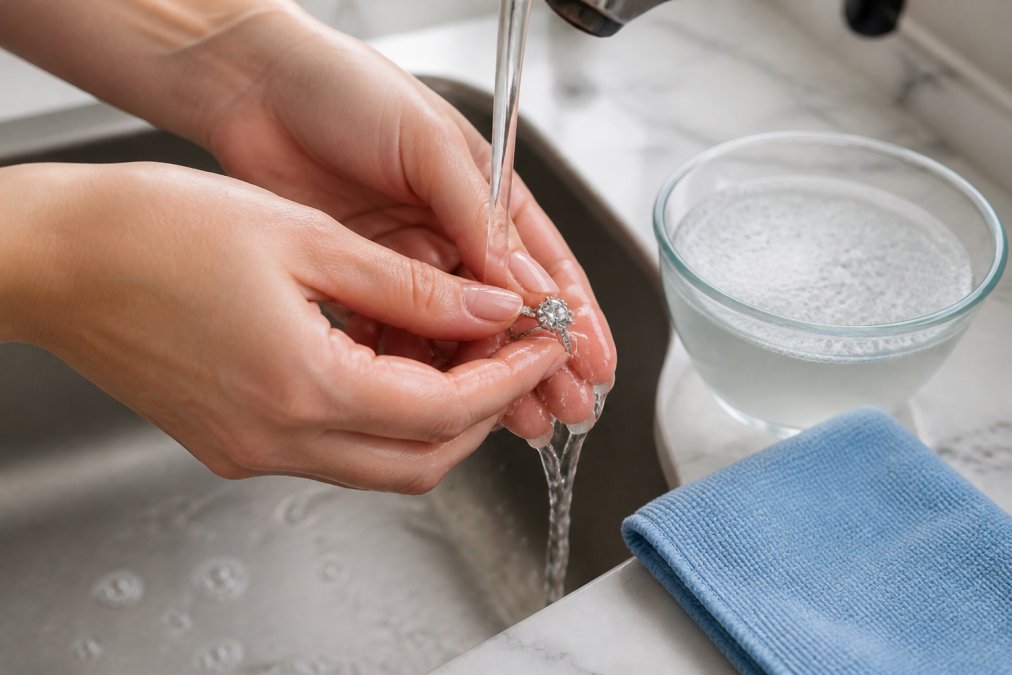
Avoid paper towels or regular cloth when drying. A microfiber cloth won't damage the metal and won't leave residue on the stone.
Deep Cleaning for Stubborn Buildup
When daily rinsing isn't enough, usually after a few weeks of regular wear, a deeper clean removes stubborn mineral deposits:
- Fill a small bowl with warm water and add a few drops of mild dish soap
- Soak the ring for 15-20 minutes to soften buildup
- Use a soft-bristled toothbrush to gently scrub the stone and setting
- Pay special attention to the back of the stone where dirt accumulates under the setting
- Rinse thoroughly under running water multiple times to remove all soap
- Dry completely with a microfiber cloth
For extremely stubborn buildup, an ultrasonic cleaner works well for moissanite. However, it's not necessary for routine care; the soap-and-water method handles most situations effectively.
Understanding the Moissanite Oil Slick Effect
The "oil slick effect" describes rainbow-like colors or a hazy film on moissanite, which some worry indicates a problem. In reality, it's simply evidence of surface contamination, usually oil or water residue interacting with the stone's high refractive index.

This effect is more noticeable on moissanite than on diamonds because of the stone's superior refractive properties. The same oil film that barely affects a diamond's appearance becomes clearly visible on moissanite. This isn't a flaw; it's evidence of the very property that makes moissanite so beautiful.
The oil slick effect typically appears as a milky haze or subtle rainbow pattern across the stone's surface. It develops gradually as oils accumulate and disappears completely with proper cleaning. Understanding this helps distinguish between cosmetic issues and structural problems.
Moissanite Durability: Myths vs. Reality
Several myths surround moissanite durability, many stemming from misunderstandings about how the stone interacts with daily wear.
Myth: Moissanite gets cloudy permanently and can't be restored. Reality: Moissanite doesn't cloud permanently. What appears to be cloudiness is always surface contamination, which cleaning removes completely.
Myth: Moissanite scratches easily because it's not a real diamond. Reality: Moissanite rates 9.25 on the Mohs hardness scale, making it harder than any gemstone except diamond. It resists scratching exceptionally well.
Myth: Moissanite loses its sparkle over time and becomes dull permanently. Reality: Moissanite maintains its optical properties forever. Any perceived dullness is surface buildup, not internal degradation.
Myth: You need professional cleaning to keep moissanite looking good. Reality: Basic at-home cleaning with mild soap and water maintains moissanite perfectly. Professional cleaning is optional.
Long-Term Wear and Scratching
Moissanite's exceptional hardness means it withstands decades of daily wear without visible damage. You'd need deliberate contact with diamond or specialized abrasives to scratch moissanite. The metal setting, not the stone, is what requires care during long-term wear.
Moissanite can show fingerprints and dust more readily than diamonds because of its high refractive index. This isn't a durability issue; it's a visibility issue. The stone shows surface contamination more clearly, which is why regular cleaning is important for maintaining appearance.
Comparison with Other Gemstones
Moissanite's durability compares favorably to other popular gemstone choices:
| Gemstone | Mohs Hardness | Durability for Daily Wear | Oil Attraction |
|---|---|---|---|
| Moissanite | 9.25 | Excellent; resists scratching | High; requires regular cleaning |
| Diamond | 10 | Excellent; highest hardness | Moderate; less visible buildup |
| Sapphire | 9 | Excellent; very durable | Moderate |
| Ruby | 9 | Excellent; very durable | Moderate |
| Cubic Zirconia | 8-8.5 | Good; scratches over time | High; clouds quickly |
Moissanite stands out for its combination of exceptional hardness and affordability. Unlike cubic zirconia, which scratches and clouds over time, moissanite maintains its properties indefinitely. The trade-off is that moissanite requires slightly more frequent cleaning because its optical properties make surface contamination more visible.
Maintaining Your Moissanite Jewelry
Long-term care for moissanite is straightforward and requires no special equipment or expensive treatments. Establish a habit of rinsing your moissanite ring daily with warm water and mild soap. This prevents the oil accumulation that causes visible dullness. On weekends or when you notice any haze, do a more thorough cleaning with the soaking method.
Store your moissanite jewelry in a clean, dry place. A soft jewelry pouch or box prevents dust accumulation when the ring isn't being worn. Inspect your ring periodically for loose settings or damage to the metal band. A jeweler can tighten settings or repair metal without affecting the stone.
Consider professional cleaning annually if you prefer, though it's not necessary. Life Gets Better's collection includes sterling silver moissanite pieces like the Sterling Silver Everyday Essential CZ Studs at $50.00 and the Sterling Silver 2mm Thin CZ Band Ring at $100.00, which are designed for daily wear and maintain their brilliance with basic care.
Moissanite is a genuinely durable choice for everyday jewelry that maintains its beauty with minimal effort. The appearance of cloudiness or dullness is always temporary surface contamination, never permanent damage to the stone itself. Understanding this distinction transforms how you approach moissanite care, from worrying about durability to confidently maintaining a stunning piece through simple, regular cleaning.
If you're considering moissanite for an engagement ring, everyday jewelry, or a gift, the durability and sparkle make it an excellent investment. Start with a quality piece from Life Gets Better and establish a basic cleaning routine. Your moissanite will maintain its fire and brilliance for decades, delivering lasting value and beauty.
Frequently Asked Questions
Does moissanite ever get cloudy permanently?
No. Moissanite does not get permanently cloudy. What appears to be cloudiness is typically a temporary film of oil, dirt, or mineral residue on the surface. The stone's hardness on the Mohs scale (9.25) and refractive index properties remain unchanged over time. Professional polishing can restore brilliance if needed, but in most cases, a simple cleaning at home restores full sparkle and clarity.
How often should you clean moissanite to prevent dullness?
Clean your moissanite ring weekly with mild dish soap and warm water to prevent buildup. Daily-wear pieces accumulate oils and cosmetic residue quickly. If you notice the stone losing its luster between cleanings, use an ultrasonic cleaner monthly or have it professionally polished once a year. Consistent maintenance prevents the haze that makes moissanite appear dull.
What causes the moissanite oil slick effect?
The oil slick effect occurs when body oils, lotion, and environmental contaminants accumulate on the stone's surface, creating a film that reduces light refraction and brilliance. This is cosmetic buildup, not a gemological defect. The high refractive index of moissanite actually makes it more prone to showing surface contamination than some other gemstones. Regular cleaning with a microfiber cloth removes this film instantly.
Is moissanite more durable than cubic zirconia for long-term wear?
Yes. Moissanite ranks 9.25 on the Mohs hardness scale, making it far more resistant to scratches and abrasion than cubic zirconia (8-8.5). Over years of daily wear, moissanite maintains its clarity and fire, while cubic zirconia dulls and scratches more easily. For jewelry you plan to wear permanently, moissanite's durability justifies the investment and requires less frequent professional polishing.
This article was written using GrandRanker