
Table of Contents
- Why Elevating Your Daily Routine Matters
- Morning Routine Ideas for Productivity That Actually Stick
- Self-Care Habits for Busy Professionals
- How to Build a Sustainable Wellness Routine
- Simple Ways to Upgrade Your Lifestyle
- The Role of Sleep, Stress, and Consistency
- Making Your Routine Adaptable and Realistic
- Conclusion
Last Updated: August 22, 2026
Why Elevating Your Daily Routine Matters
The difference between a scattered day and an intentional one comes down to how you structure it. When you elevate your daily routine, you're building a foundation that supports your energy, mood, stress resilience, and how you show up in your own life.
Most people react to their day rather than direct it. But those who feel grounded and energized have made deliberate choices about how their days unfold, integrating small practices that compound into meaningful change. At Life Gets Better, the right wellness accessories and self-care products become anchors in a routine, turning fleeting moments into rituals that matter.
Research is clear: consistency shapes your life more than intensity ever will. A sustainable wellness routine doesn't require overhauling everything tomorrow, it requires understanding what's working, what's missing, and where small changes create the biggest ripple effects.
Morning Routine Ideas for Productivity That Actually Stick
Start with intention, not screens
The first decision you make each morning sets the tone for everything that follows. Most people reach for their phone before their feet hit the ground, letting notifications hijack their attention before they've even had coffee.
Starting with intention means claiming the first 10-20 minutes of your day as yours. This might be journaling three things you want to focus on, five minutes of breathing or stretching, or simply sitting quietly with your coffee before opening any apps. You're choosing what gets your attention first, not letting your phone choose for you.

This small shift changes how your brain approaches the day. When you start intentional, you stay intentional longer, make better decisions about where your energy goes, and are less likely to fall into reactive patterns that drain you by noon.
Build in physical movement
Your body and mind are not separate systems. How you move in the morning directly affects your mental clarity, stress resilience, and energy throughout the day. Physical movement doesn't mean an intense workout, it means getting your body activated and warm.
Dynamic stretching, a short walk, or five minutes of gentle movement signals to your nervous system that you're ready to engage. Movement within the first hour of waking has a stronger effect on your circadian rhythm and energy levels than movement later in the day, setting you up for better focus, fewer afternoon crashes, and more stable energy (peer-reviewed research).
Self-Care Habits for Busy Professionals
Integrate wellness into existing routines
The biggest mistake busy professionals make is treating self-care as something requiring extra time. The real strategy is integration: self-care lives inside the routines you already have, not in a separate box.
Your shower becomes a sensory reset when you use quality body oil afterward. Your evening wind-down becomes a ritual when paired with a warm bath and intentional products. Your morning gets a boost when you use a lotion that feels like a treat instead of a chore. When you integrate wellness into routines you already do, you're not adding time, you're upgrading the quality of time you're already spending.
Use quality products that feel like a treat
Generic products feel functional but not special, and over time the routine becomes another task instead of a moment of care. Quality products create a psychological shift: when you use something that smells good, feels luxurious, and is made with ingredients you trust, your brain registers it differently. It's not just skincare, it's a small act of self-respect.
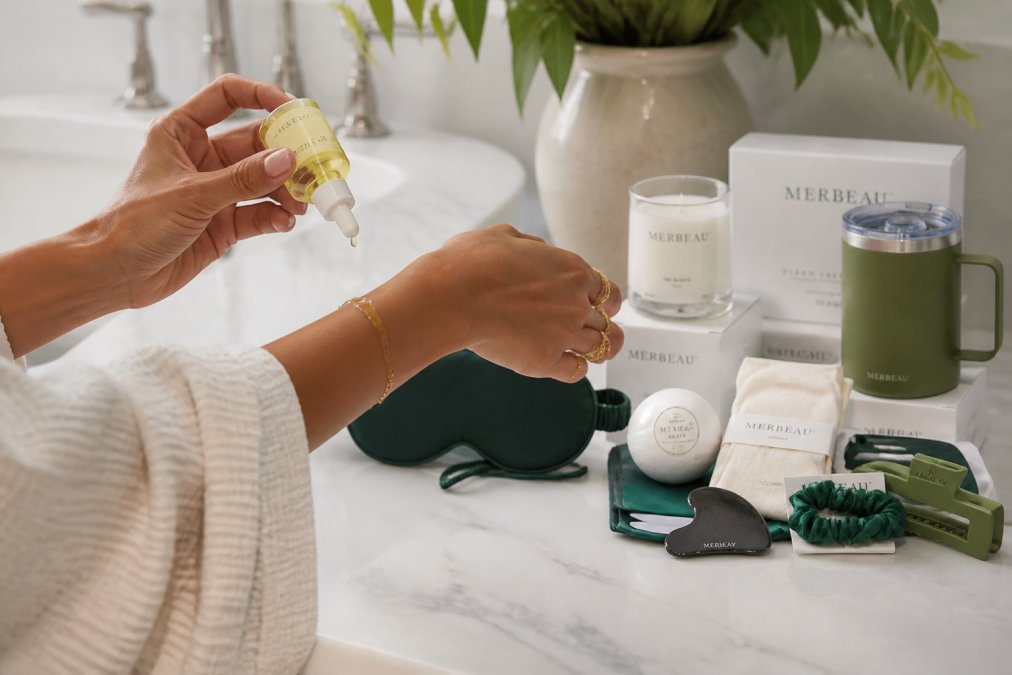
Life Gets Better's curated collection includes options like the Merbeau Luxury Self Care 13 Piece Gift Set and the SOULISTIC ROOT Revitalizing Bath Gift, which bring genuine quality into daily moments. These aren't indulgences added on top of your routine, they're upgrades to routines you're already doing. A bath becomes restorative. A shower becomes a sensory reset. A moment with quality lotion becomes a ritual of care.
How to Build a Sustainable Wellness Routine
Apply habit stacking to cement new behaviors
Habit stacking is one of the most effective ways to build a sustainable wellness routine. Attach a new habit to an existing one: your brain already has neural pathways for established routines, so stacking a new behavior onto an old one uses that existing pathway as a trigger.
Examples: After you brush your teeth, stretch for five minutes. After you pour your morning coffee, journal. After you shower, apply body oil. After you close your laptop, do a breathing practice. Start with two or three stacks and master those before adding more. Each should take less than five minutes. Consistency beats intensity, a five-minute daily practice beats a 30-minute practice you do once a month.
Audit your current routine for gaps
Most people have never examined their routine. Write down what you actually do from waking to sleep, including small things like phone time and when you move or rest. Then ask three questions: What's working? What's draining? What's missing?
Working habits leave you energized or grounded. Draining habits steal energy without giving anything back. Missing elements are practices you know would help but haven't integrated. This audit reveals where small changes create the biggest impact.
Simple Ways to Upgrade Your Lifestyle
Elevating your daily routine doesn't require dramatic changes, it requires strategic upgrades to moments that matter most. Start with your morning: claim 10 minutes for intention instead of reaching for your phone, add five minutes of stretching, and upgrade self-care to products that feel like a treat. The Sun Infused After Shower Body Oils or Natural Lotion with Pine transform a basic moment into something intentional.
Upgrade your evening wind-down next. Build 15 minutes of genuine rest with a warm bath using quality products, journaling, or sitting without your phone. The SOULISTIC ROOT Revitalizing Bath Gift offers everything needed for a spa-like experience at home.
Then examine work-day transitions and stress management. Where does stress show up in your body? What practice would address that? Your routine should include at least one restorative practice you actually enjoy.
The Role of Sleep, Stress, and Consistency
Optimize sleep hygiene for better energy
Sleep quality determines everything else: your ability to handle stress, make decisions, regulate emotions, and maintain energy. The most impactful change most people can make is consistency, going to bed and waking at the same time every day, even weekends.
Your circadian rhythm thrives on consistency. When your sleep schedule is irregular, your body never fully settles into a rhythm, affecting energy levels and stress regulation. Beyond schedule, your sleep environment matters: keep your bedroom cool, dark, and quiet. Turn off screens at least 30 minutes before bed. Your pre-sleep routine should signal wind-down time through reading, journaling, or a warm bath.
According to sleep research from the National Institutes of Health, adults who maintain consistent sleep schedules show improved cognitive function, better emotional regulation, and stronger immune response.
Manage stress through restorative practices
Stress is inevitable; how you process it determines whether it compounds or dissipates. Most people let stress accumulate, pushing through the day hoping it resolves. It doesn't. Unprocessed stress builds in your body and mind, making everything harder.
Restorative practices help your nervous system shift out of stress mode. These include breathwork, gentle movement, journaling, time in nature, or warm baths, practices that slow you down and signal safety to your nervous system. The American Psychological Association's guidance on stress management emphasizes that effective stress management combines physical practices with mental practices. Building restorative practices into your daily routine means processing stress as it happens, not letting it accumulate.
Making Your Routine Adaptable and Realistic
The biggest reason routines fail is that they're too rigid. A sustainable routine has a core and flexibility around it. Your core might be: morning intention, some form of movement, and evening wind-down. Everything else can shift based on what's actually happening in your life.
On days with less time, your routine gets shorter, not abandoned. Your five-minute stretching becomes two minutes. Your 20-minute bath becomes a 10-minute shower with quality products. The ritual remains, but duration adjusts.
For neurodivergent brains, rigid routines often backfire. Build a routine that works with your natural rhythm. If you're a night person, don't force a 5 a.m. wake-up. If you have ADHD, use habit stacking with visual cues instead of relying on memory. Your routine should feel designed for you, not against you.
The goal is consistency with flexibility. You're consistent about intention and practice. You're flexible about timing and duration.
Elevating your daily routine is one of the most direct ways to improve how you feel and function. It doesn't require major life changes, it requires understanding what serves you, removing what drains you, and building rituals that feel intentional instead of automatic.
Life Gets Better makes this easier by offering curated wellness products that transform ordinary moments into acts of self-care. Small upgrades compound into meaningful change. Start with one area of your routine. Audit what's there. Add one intentional practice. Then let that foundation support everything else.
| Routine Element | Time Required | Best For | Key Practice |
|---|---|---|---|
| Morning intention | 5-10 minutes | Clarity and focus | Journaling or breathing |
| Physical movement | 5-15 minutes | Energy and mood | Stretching or walking |
| Self-care integration | 2-5 minutes | Well-being | Quality products during existing routines |
| Evening wind-down | 15-30 minutes | Sleep quality | Bath, journaling, or meditation |
| Stress management | 5-20 minutes | Emotional regulation | Restorative practice of choice |
| Sleep consistency | 7-9 hours | Overall health | Same bed/wake time daily |
Frequently Asked Questions
How can I make my daily routine more exciting without adding more tasks?
Small shifts in how you approach existing activities create excitement. Swap mindless scrolling for journaling, add music to your morning stretch, or introduce one premium self-care product like the Merbeau Luxury Self Care 13 Piece Gift Set ($99.99) that makes routine moments feel like a treat. Intentionality transforms ordinary tasks into moments you actually look forward to.
What's the best way to build a sustainable wellness routine when I'm busy?
Use habit stacking: attach new wellness practices to existing routines. If you shower daily, follow with the Sun Infused After Shower Body Oils ($15.00) to anchor self-care into your schedule. Start with one small win rather than overhauling everything. Consistency beats perfection, and small daily actions compound into lasting behavioral change.
How long does it take to see results from elevating your daily routine?
Mental clarity and stress reduction often appear within days. Energy levels and mood improvements typically show within 2-3 weeks as your circadian rhythm stabilizes. Physical benefits like better sleep and reduced stress take 4-6 weeks. The key is tracking small wins early, better sleep quality, more focus, or improved emotional regulation, to stay motivated through the consistency phase.
Can I adapt a daily routine if I have ADHD or neurodivergence?
Absolutely. Neurodivergent routines work best with flexibility built in. Use time blocks instead of rigid schedules, reduce cognitive load by automating decisions (same morning sequence, same products), and batch similar tasks. Accountability through habit tracking or a wellness product you enjoy using helps maintain consistency without feeling restrictive. Quality over quantity matters more than traditional routine structures.
This article was written using GrandRanker