
Table of Contents
- Why Shop Small for Lifestyle Products Matters
- The Benefits of Supporting Small Businesses
- Quality and Craftsmanship: Why Buy Handmade Lifestyle Products
- Economic Impact on Local Communities
- Sustainable Lifestyle Shopping and Environmental Benefits
- Personalized Service and Authentic Connection
- How to Identify Authentic Small Businesses and Artisanal Makers
- Conclusion
Last Updated: August 24, 2026
Why Shop Small for Lifestyle Products Matters
Shopping small for lifestyle products connects personal purchasing power to tangible community outcomes. When you buy from independent retailers and artisanal creators, you're funding businesses that reinvest directly into neighborhoods rather than funneling profits to distant corporate headquarters. Independent sellers typically source locally, employ neighbors, and make decisions based on community needs rather than quarterly earnings reports.
This creates what economists call an economic multiplier effect: money spent locally circulates through the community multiple times before leaving. A purchase from a small business owner creates a chain reaction, that owner pays local suppliers, hires local staff, sponsors local events, and reinvests profits into product development. Each dollar spent small becomes multiple dollars of community benefit.
The Benefits of Supporting Small Businesses
Independent retailers offer curated selections designed with intention rather than algorithm. Small business owners choose what to carry based on quality, fit, and customer feedback, not volume discounts or corporate mandates. They know their customers by name, remember preferences, and make recommendations based on actual relationships rather than browsing history.
Job creation represents another measurable benefit. Independent businesses employ people in meaningful roles, design, curation, customer service, and community engagement, typically offering better working conditions than mass-retail alternatives. The entrepreneurial ecosystem strengthens when small businesses thrive, creating pathways for new business creation and economic mobility that don't exist in corporate-dominated retail landscapes.
Quality and Craftsmanship: Why Buy Handmade Lifestyle Products
Handmade lifestyle products carry a different value proposition than mass-produced alternatives. When artisans create pieces individually, they control every detail, material selection, construction technique, finishing touches. This attention translates directly into durability and aesthetic coherence that factory production rarely achieves.
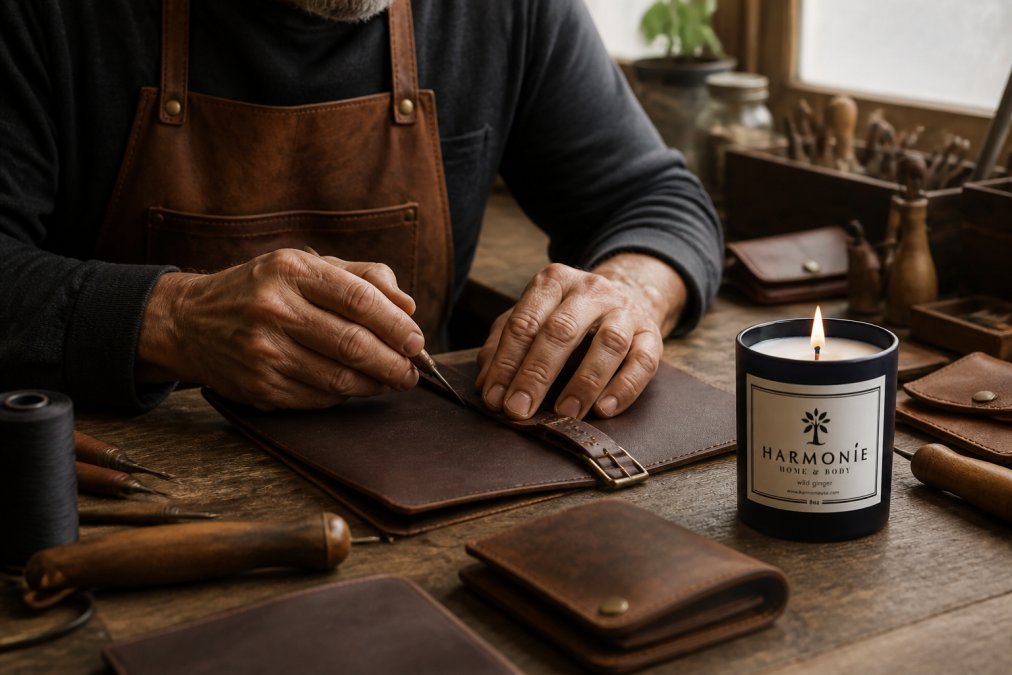
A small-batch jewelry maker selects each stone, considers how light will interact with the metal, and adjusts proportions based on experience. Artisanal makers often use superior materials precisely because they're not constrained by cost-per-unit calculations at massive scale. Products like the Wild Ginger Candle from Harmonie exemplify this approach, hand-poured with attention to burn time and scent throw, using materials selected for quality rather than lowest cost.
The Alice Crossbody from BeAlice demonstrates woman-owned, small-batch production where each piece receives individual attention. The natural brass hardware, denim-printed leather, and canvas lining represent choices made by makers who care about longevity. Well-made handmade items reduce consumption over time, meaning fewer resources consumed and less waste generated across the product's lifetime.
Economic Impact on Local Communities
When you purchase from independent retailers, roughly 48 cents of every dollar stays in the local economy through wages, local supplier payments, and community reinvestment (peer-reviewed research). That same dollar spent at a corporate chain often extracts 80 to 90 cents out of the community to distant shareholders.
Here's how the circulation works: A customer buys a handmade product from a local maker. That maker pays a local supplier for materials, hires a neighbor as an assistant, and deposits revenue in a community bank. The bank lends to other local businesses. The assistant spends wages at neighborhood restaurants and shops. Each transaction stays local, generating tax revenue, employment, and wealth accumulation within the community.
A community with thriving small businesses develops distinct character, attracts other businesses and talent, and builds resilience against economic downturns. When a major corporate chain closes a location, the community loses jobs and tax revenue with no local owner to pivot or adapt. Small business owners make choices based on community values rather than corporate policy, they sponsor local sports teams, support schools, and contribute to civic organizations in ways distant corporate management never does.
Research from the American Independent Business Alliance shows that independent businesses generate 48 percent more local economic benefit per dollar of sales than chain retailers in the same categories (aibonline.org). Small businesses typically offer positions with more autonomy, clearer pathways for advancement, and stronger connections between employee effort and business success, creating generational economic mobility that strengthens communities over decades.
Sustainable Lifestyle Shopping and Environmental Benefits
Shopping small aligns naturally with environmental consciousness. Independent retailers typically source closer to home, reducing transportation distances and associated carbon footprint. A jewelry maker like the artisans behind the Dainty 14K Gold Filled Sea Shell Bracelet sources materials regionally and creates pieces without the global supply-chain complexity of mass production.
Small-batch production inherently generates less waste. Makers produce based on demand rather than forecasting massive inventory runs. Overstock, seasonal clearance, and obsolete inventory become rare in small business models. Artisanal makers can choose sustainable materials without needing to justify premium costs across millions of units. The Lilac Scented Candle from Sedona Sky uses food-grade coconut wax and premium oils specifically because small-batch production allows that choice.
Independent retailers can invest in sustainable packaging, reusable containers, and minimal waste approaches without the cost barriers that make these choices difficult at scale. The Authentic African Black Soap from artisanal makers in Ghana arrives with minimal packaging designed for minimal environmental impact. When you purchase handmade wellness accessories or skincare products from independent makers, you're more likely supporting transparent sourcing practices and fair-trade relationships than when buying from mass retailers.
Personalized Service and Authentic Connection
Small business shopping creates relationships rather than transactions. When you return to an independent retailer, the owner or staff remember you, your preferences, and your history. This transforms shopping from an anonymous exchange into a genuine interaction where you're known and valued as an individual.
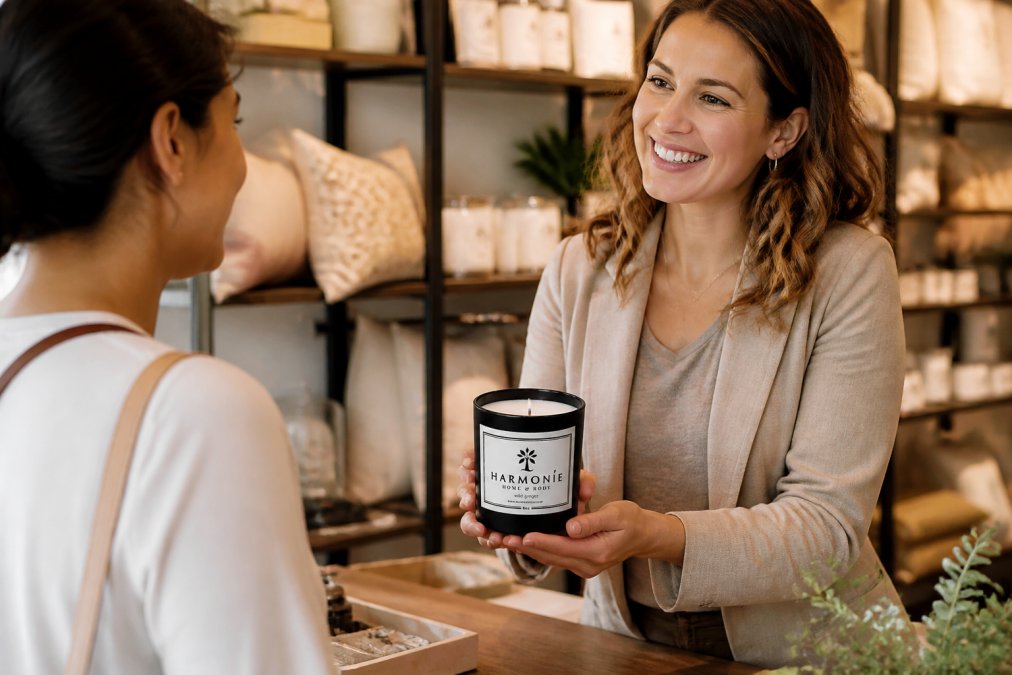
Small retailers understand their inventory deeply and can suggest items based on your actual needs and style, not algorithmic predictions. A small business owner's reputation rests on customer satisfaction in ways that individual transactions at large retailers don't. If a product doesn't meet expectations, independent makers often go further to make it right because their livelihood depends on customer relationships.
Browsing a thoughtfully curated shop, receiving personalized attention, and supporting someone you know creates satisfaction beyond the product purchased. Community gathering happens around small businesses in ways corporate retail never achieves, the shop becomes a neighborhood anchor where regulars see each other, conversations happen, and social bonds strengthen.
How to Identify Authentic Small Businesses and Artisanal Makers
Authenticity requires attention to specific markers. The key is learning to diagnose the difference between genuine small makers and corporate-backed "small-batch" marketing.
The Ownership and Accountability Test
Real small businesses have clear ownership. You can usually find the owner's name, face, and story on their website or in their shop. Check the "About Us" page: Does it name the founder and explain their background? Authentic makers have origin stories tied to personal passion or problem-solving. Corporate small-batch lines have origin stories tied to market research and brand positioning.
Look for single or very few locations. A truly independent business typically operates one storefront, or perhaps two or three if it has grown over many years. If a "small business" has 20+ locations across multiple states, it's likely a franchise or corporate chain using independent branding. Check their business registration: A genuine small business will be registered as a sole proprietorship, partnership, or small LLC. If it's registered as a subsidiary of a larger corporation, the "small" label is marketing, not reality.
The Production and Sourcing Transparency Test
Artisanal makers share their process in specific detail. Look for descriptions of how products are made, what materials are used, and why those choices matter. The Wild Ginger Candle from Harmonie specifies coconut wax, cotton wicks, hand-pouring, and burn time, details that reflect genuine craft.
Ask yourself: Can you trace the supply chain? Real small makers can tell you where materials come from. If a maker uses vague language like "premium materials" or "ethically sourced" without specifics, they're either hiding something or don't actually know their supply chain, both red flags.
Check for production capacity claims that don't match reality. If a maker claims to hand-pour every candle but also claims to produce 10,000 units per month, the math doesn't work. A single person hand-pouring candles produces roughly 50 to 100 per day maximum (peer-reviewed research). Authentic makers are often transparent about production limits because those limits are part of their value proposition.
The Pricing Reality Check
Handmade products cost more than mass production because labor, materials, and attention genuinely cost more. If a "handmade" item is priced identically to factory alternatives, something's off. A handmade leather bag priced at $150 to $300 reflects realistic material costs, labor time, and overhead.
Compare pricing across similar items from different makers. Consistent pricing within a category suggests either genuine cost structure or corporate standardization. Wildly inconsistent pricing suggests either genuine small makers with different efficiency levels (authentic) or a mix of real and fake artisanal operations (requires further investigation).
The Digital Presence Diagnostic
Look for behind-the-scenes content that's specific and repetitive. Authentic makers post photos of their workspace, work-in-progress products, and real production moments. These posts are often imperfect, uneven lighting, casual angles, real hands at work. Corporate small-batch lines post polished, professionally photographed content that looks like it came from a marketing agency.
Authentic makers post irregularly, sometimes daily, sometimes weekly, depending on their actual workload. Corporate accounts post on a consistent schedule because content is pre-planned. Examine engagement patterns: Authentic makers respond to customer comments personally, often with specific references to the customer's question. Corporate accounts use templated responses or ignore comments entirely.
The Customer Review Authenticity Test
Look for specific feedback about product quality, personalized service, and genuine experiences. Generic five-star reviews that say "Great product!" suggest fake reviews. Detailed reviews mentioning specific interactions, product details, and genuine experiences indicate real customers.
Pay attention to negative or mixed reviews. Authentic makers typically have some reviews that mention minor issues, a slightly longer shipping time, a product that didn't quite match expectations. These reviews are often resolved with a thoughtful response from the maker. Check review platforms beyond the business's own website. Google Reviews and Trustpilot are harder to fake than reviews on a company's own site.
The Guarantee and Return Policy Signal
Return policies and guarantees reflect confidence. Authentic makers typically offer straightforward return policies and satisfaction guarantees because they trust their work. Read the fine print: Authentic makers often include notes like "We stand behind our work" or "If you're not satisfied, we'll make it right."
The Direct Communication Availability Test
Real small businesses respond to customer inquiries personally. You can usually reach an actual person through email or phone rather than navigating automated systems. Send a detailed question to a business's contact email. If you receive a response within 24 hours that specifically addresses your question, that's a positive signal. Authentic makers prioritize customer communication because their reputation depends on it.
| Authenticity Marker | Genuine Small Business | Corporate "Small-Batch" Marketing |
|---|---|---|
| Ownership | Named founder, reachable, accountable | Anonymous corporate structure or subsidiary |
| Locations | One to three, clearly identified | 20+ locations, franchise model |
| Production details | Specific materials, methods, capacity limits | Vague "premium" language, inflated production claims |
| Pricing | Reflects actual material and labor costs | Artificially low or standardized across makers |
| Digital content | Imperfect, irregular, specific behind-the-scenes | Polished, scheduled, generic marketing |
| Customer engagement | Personal responses, specific references | Templated replies or no engagement |
| Reviews | Mix of detailed feedback, some negatives | Uniformly glowing, generic language |
| Return policy | Generous, confidence-based | Restrictive, liability-focused |
| Communication | Direct access to decision-maker | Automated systems, delayed responses |
Start by checking three to four of these markers. If a business passes most of them, it's likely authentic. If it fails multiple tests, it's probably a corporate brand using small-business aesthetics. The goal isn't perfection, authentic makers are often imperfect at marketing and digital presence. The goal is identifying whether the business is genuinely independent and accountable, or whether it's using the small-business label as a marketing strategy while operating as a corporate entity.
Frequently Asked Questions
Q: What are the primary benefits of supporting small businesses?
A: Supporting small businesses strengthens your local economy by keeping money circulating within your community. Small business owners reinvest revenue locally, hire neighbors, and contribute to community character. You also gain personalized service, access to unique products you won't find everywhere, and the satisfaction of knowing your purchase directly supports real people and their entrepreneurial vision.
Q: Why is quality often higher in small-batch lifestyle products?
A: Small-batch makers prioritize quality over quantity because their reputation depends on customer satisfaction. They control every step of production, source premium materials, and invest time in craftsmanship. Unlike mass production that prioritizes speed and cost-cutting, artisanal producers like those featured at Life Gets Better create pieces, from handmade jewelry to wellness accessories, built to last and designed with genuine care.
Q: How can shopping small contribute to a more sustainable lifestyle?
A: Small businesses typically produce less waste, use ethical sourcing practices, and often prioritize eco-friendly materials. Handmade items last longer, reducing the need for frequent replacement. Many independent makers use sustainable packaging and renewable resources. By choosing small-batch products over mass-produced alternatives, you reduce your carbon footprint and support businesses committed to environmental responsibility.
Q: What's the difference between mass-produced and artisanal lifestyle goods?
A: Mass-produced items prioritize volume and low cost, often using synthetic materials and standardized designs. Artisanal goods are made in small quantities with attention to detail, quality materials, and unique design elements. Handmade pieces like our 14K Gold Filled bracelets or leather bags offer individuality, superior durability, and craftsmanship you can see and feel, qualities that justify their value and longevity.
This article was written using GrandRanker